
Paver sealing for Arlington homes
Paver Sealing in Arlington, FL
Arlington sits on sandy ground, so call (904) 606-1450 for a free paver sealing estimate that starts with the base.
- Brings out deeper paver color
- Fresh joint sand helps lock pavers in place
- Gives weeds less room to grow
- Makes the surface easier to keep clean
- Free estimate, no obligation
Request a Free Estimate
Free, no obligation.
Fast, careful paver sealing in Arlington
Paver sealing is available across Arlington, from the ranch streets near Lake Lucina to the creek-side blocks around Pottsburg Creek. A local contractor washes, re-sands and seals driveways, patios and pool decks, and the estimate is free. Reach out on (904) 606-1450 and you will get a reply within 1 business day, usually much sooner.
Say your driveway has a gray film, a few sunken spots and weeds in the seams that return after every pull. A wash, fresh sand and a new coat tidy the whole surface at once. To describe it first, you can request your free estimate and name the street.
Why hire a local paver sealing contractor in Arlington?
Arlington was built fast after 1953, on sandy ground and fifty-year-old driveways, so many pavers here carry more than one story. To hear how that applies on your street, request your free estimate.
Quote after a look
A contractor measures your Arlington drive, patio or deck and quotes a price in person. No fee for the visit, no pressure afterward.
Published price range
Across Northeast Florida the going published rate is $1.75 to $3.25 per square foot, wash, sand and seal included.
Mid-century fronts
Matte keeps a 1950s brick front calm. Wet look adds shine, but it scuffs sooner where tires turn every day.
Yes or no, your call
Pick a date and a finish, or decline altogether. An Arlington estimate carries no obligation.
Get Your Free Estimate in Arlington
Tell us about your pavers in Arlington.
Free, no obligation
What paver problems show up most in Arlington?
Sand under the pavers, from dunes and old mining
Regency Square Mall opened in 1967 on an expanse of sand dunes, and the land now home to the Jacksonville Arboretum was mined from 1941 to 1961, leaving white sand. Sandy ground drains fast, but it also shifts. Pavers can settle and joint sand can leave. The contractor checks for sunken spots, since sealing preserves a dip. A wet summer can move sand out from under the edge of a drive, which leaves a dip where water stands. If you see a low spot that holds a puddle, point it out at the first visit. Fixing the base before the coat is cheaper than redoing a sealed surface. Tree Hill's hill stands only 36 feet above sea level yet is Duval County's second highest point, which shows how flat most of this ground is.
Fifty-year-old driveways with unknown coats
Arlington grew quickly after the Mathews Bridge opened in 1953. Lake Lucina homes were built from 1951 to 1962, and Arlingwood has a median build year of 1961. Pavers added since then may have seen several owners and several sealers. Because water-based sealer cannot go over solvent-based sealer, the old coat sets the choice. If a past owner wrote down the product, you are lucky, and the contractor will ask to see it. If not, a small test spot can show whether the old coat is still sound. That small check keeps a new coat from peeling or turning cloudy. River Forest's 800 to 1,600 square foot ranches went up in the same period, so many small drives and patios share the same age. Lake Lucina's streets, with homes from 1951 to 1962, are the oldest part of that wave.
Creek water that rises and falls
Pottsburg Creek is fed by rain, retention ponds and storm drains, and its levels swing a lot. News4JAX saw flooding at its boat ramp during Nicole in 2022. Homeowners on Woolery Drive in Arlington Hills reported street flooding for a year. Silt left behind must be washed off before sealing, since sealer would hold it in place. That is why the wash on a creek-side lot gets extra time, and why the date waits for the ground to dry. After a hard storm, give the pavers a few days before you book. Strawberry Creek, Red Bay Branch and Howland Creek run the length of Tree Hill's park, and Pottsburg Creek drains much of the south.
Old oaks over the walkway
Tree Hill Nature Center has a 300-year-old oak, and the Arboretum's Live Oak Trail has trees over a century old. Many Arlington yards have big oaks too. Their shade keeps pavers damp, and moss and algae tend to grow where shade is heavy and the surface stays wet. Roots can also lift a walkway over time. Leaves, pollen and blossoms also settle into the seams each spring. A walk that looked clean in March can look blotchy by June, so shaded sides get the longest wash. Oak shade is part of what the wash has to undo. The Arboretum's Live Oak Trail has oaks more than a century old, a sign of how long this shade has been here.
Brick walls and trim beside the pavers
Arlingwood is mostly brick ranch, with homes built from 1953 on. Brick walls beside the pavers can streak if rinse water runs down them, so they get covered or rinsed lightly. Planting beds along the wall are protected too. This care adds a little time to the wash, and you can ask about it at the first visit.
Does paver sealing differ between Lake Lucina, Arlingwood and River Forest?
It can, because the neighborhoods have different lots and different ages. Lake Lucina homes date from 1951 to 1962, with a median of 1955. Arlingwood is mostly brick ranch, with a median of 1961 and a few newer builds mixed in. Tell the contractor your neighborhood when you request your free estimate.
In River Forest most homes are 1950s and 1960s ranches of roughly 800 to 1,600 square feet. Smaller homes often mean short drives and small patios, and smaller jobs cost more per foot, according to one Jacksonville cost guide. If your project is a front walk and a back patio, call (904) 606-1450 and ask how that would be priced. Many of those homes arrived after the Mathews Bridge opened in 1953 and set off two decades of growth.
Listings for these areas show no mandatory homeowners association, but check your own deed. Florida law limits an association to the standards in its own documents. If you do belong to one, give the contractor the rules when you request your free estimate.
Atlantic Boulevard, completed in 1910, was Florida's first modern improved highway, and it still cuts through Arlington. Homes near it span many decades, from early lots to the 1950s ranches. A block can hold pavers from three eras, so tell the contractor your cross street when you request your free estimate.
What does paver sealing cost in Arlington?
Three things move an Arlington quote: shade growth, sunken sections and the age of any old coat. A long drive off a ranch front adds area, so the total grows even at a flat rate. Published Northeast Florida rates sit between $1.75 and $3.25 per square foot for the clean, sand and seal. To get a figure for your layout, request your free estimate.
Cost guides from Jacksonville note that small jobs, stairs and narrow side yards raise the price per foot. A pool deck added decades ago can be larger than it looks from the patio door. Request the measured area in writing before you compare bids. Dial (904) 606-1450 and ask which of these points touch your property.
| Paved area | Typical example | Clean, sand and seal |
|---|---|---|
| 300 sq ft | Small patio or walkway | $525 to $975 |
| 600 sq ft | Two car driveway | $1,050 to $1,950 |
| 1,000 sq ft | Large driveway or pool deck | $1,750 to $3,250 |
| 1,500 sq ft | Driveway plus pool deck | $2,625 to $4,875 |
Math based on the $1.75 to $3.25 per square foot that Northeast Florida paver companies publish. Your contractor sets the actual price after seeing the surface. Repairs, leveling and stripping failed sealer are usually extra.
How does a paver sealing job work in Arlington?
Study the base
The contractor checks how your Arlington pavers drain, which spots have sunk and what sealer is down. Sandy ground can let pavers settle, so low spots are marked for resetting. Sealer laid over a dip keeps it a dip. Tell the contractor if the driveway has been patched or re-laid over the years.
Scrub off the grime
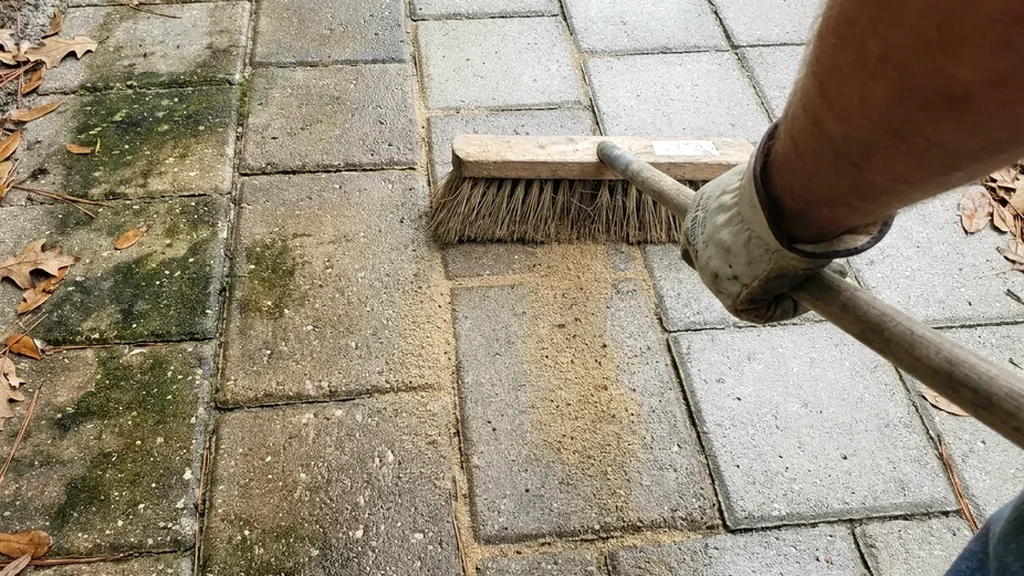
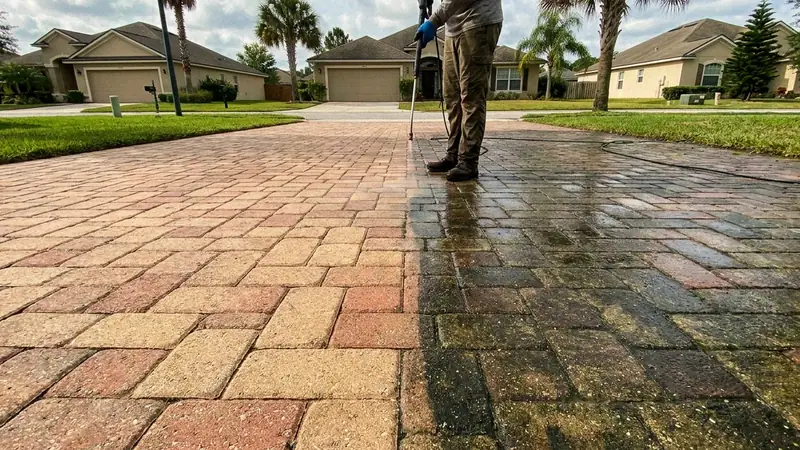
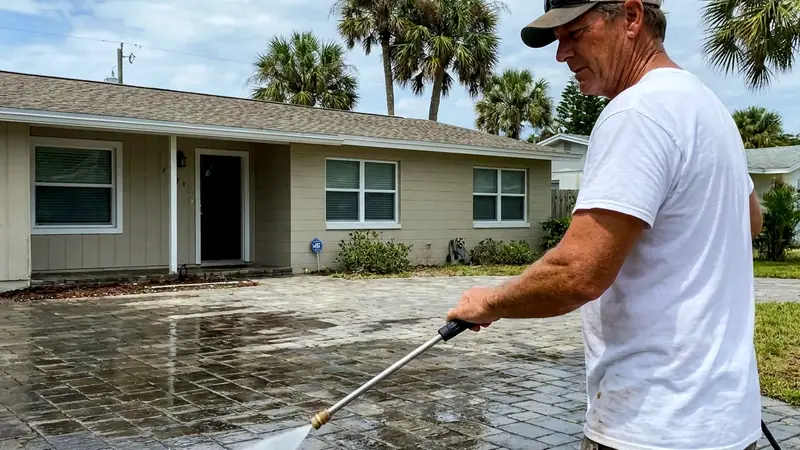
The wash lifts creek silt, green film and leaf stains, and rust gets its own treatment first. Beds, brick and wood trim near the house are shielded from spray. Shaded corners get a second pass because algae hides in the seams.
Replace the sand
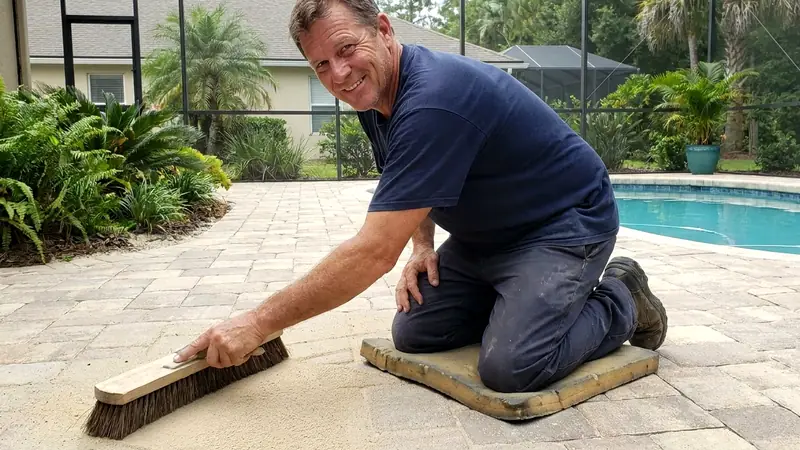
A wash takes joint sand away, so new sand is brushed in before any sealer. Fast-draining Arlington ground gives weeds and ants an easy start in thin joints, which is why this step is never skipped. Sweeping closes it out.
Wait for dry pavers
Storm season in Jacksonville runs from May to September, and low spots near creeks can hold water well after the sun returns. The contractor checks the forecast and presses on the surface before sealing. Some creek-side corners need an extra day. The contractor also asks how long it has been since the last storm.
Seal, then give it time
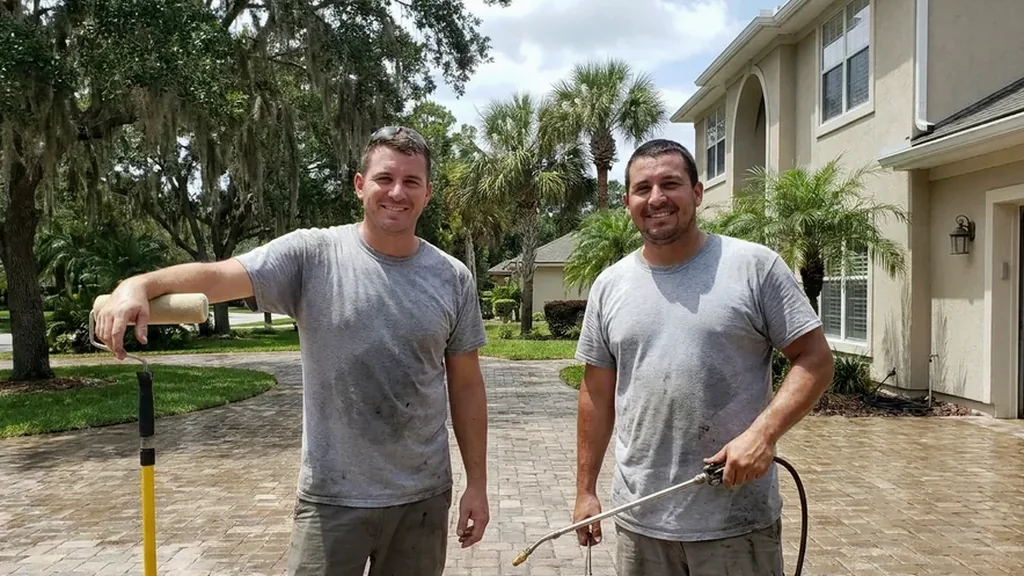
The contractor sprays and rolls your chosen finish. Walking is typically fine after hours, and cars wait around a day. Companies give a span of two to five years between coats. Keep sprinklers off the new coat on the first day.
Complete paver services in Arlington
The order of work matters more than any single product. The contractor washes first, brushes in sand next, waits for dry pavers, and seals only at the end. Sealing over damp pavers is a risk, which is why the wait is part of the plan. To hear how long each stage might run on your lot, call (904) 606-1450.
Arlington lots tend to offer a long driveway, a rear patio and sometimes a pool deck. Each gets its own measurement because each wears differently: tires on the drive, shade on the patio, sun and splash at the pool. Describe what you have when you request your free estimate and the quote will follow that list.
Two choices shape the coat: its chemistry and its sheen. A solvent-based coat from an earlier owner rules out a water-based one over it, and a wet look scuffs sooner than matte. Brick ranches often suit matte. To compare finishes for your front, call (904) 606-1450.
Dates here bend around the weather. Sandy ground drains quickly, yet low corners and shaded patios keep their water, and sealer waits for dry pavers. A creek-side lot may need extra days after a storm. To pencil in a day that works for your street, request your free estimate.
Questions to ask before you hire
- How do you protect my landscaping and potted plants from the cleaner and sealer?
- Will you show me the sealer's data sheet, not just the product name?
- Do you rinse salt film off the pavers before sealing, since I am close to the ocean?
- Do you seal the edges along the grass and the pool coping too?
- Does the sealer you use leave a wet look or a natural matte finish?
- If a paver is cracked or loose, do you reset it before the wash or leave it?
- How often will these pavers need a fresh coat in this coastal sun and humidity?
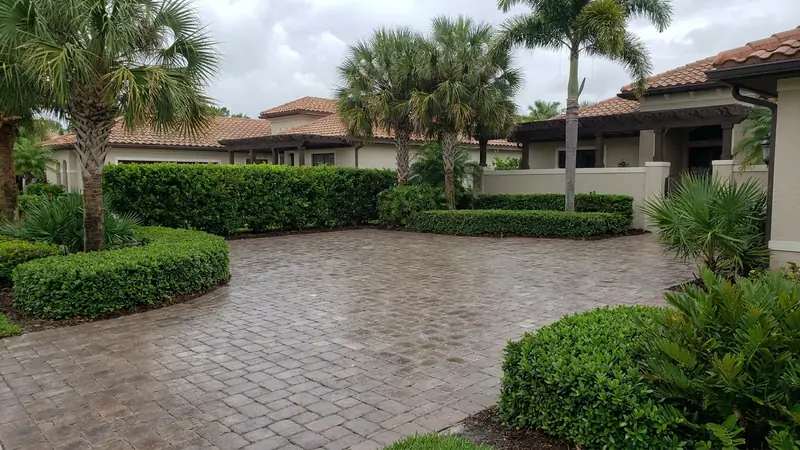
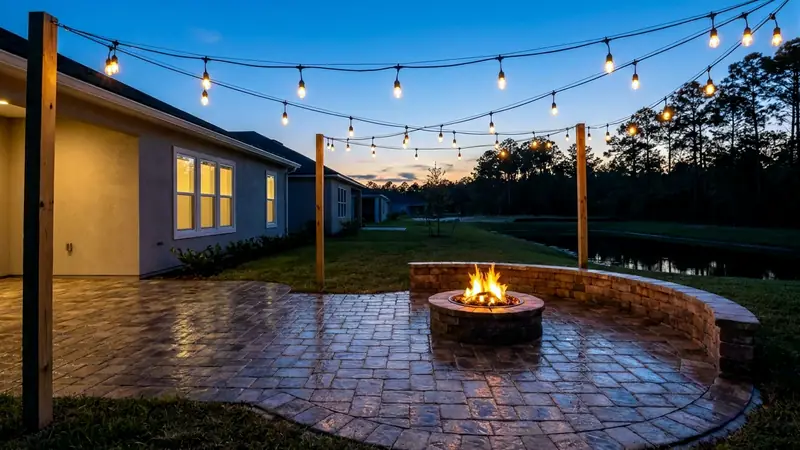
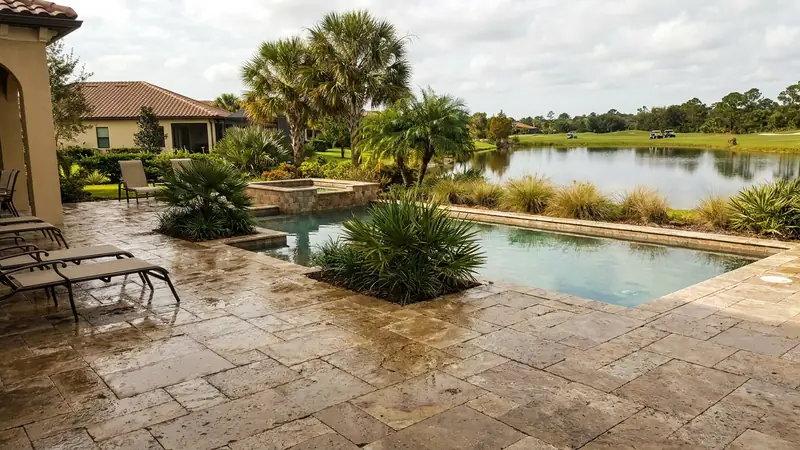
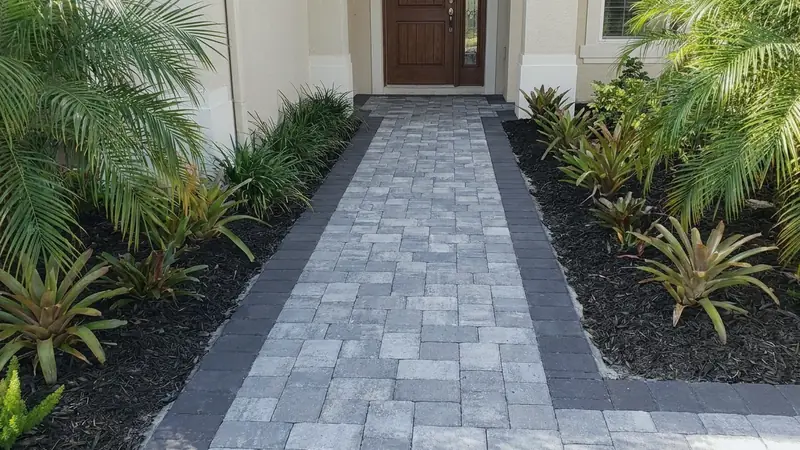
What do sealed pavers look like around Arlington?
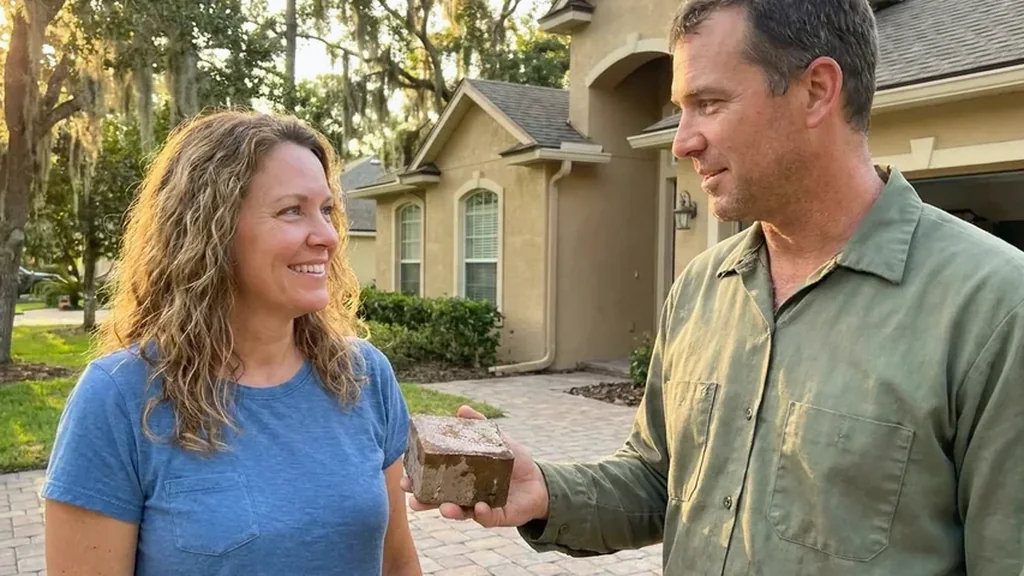
Why local matters in Arlington
A contractor who knows Arlington will ask which neighborhood you live in, since a 1955 street and a 2000 street carry different histories. That tells them what coats and base to expect. Someone from across town may not ask. To reach a contractor who serves this part of Duval County, call (904) 606-1450.
Water is part of local knowledge. Pottsburg Creek swings with the rain, and Arlington Hills streets have flooded before. A contractor who works here plans the wash for low lots and the date for dry weather. You can request your free estimate and ask how your street would be handled.
Older homes bring older materials. Brick fronts, stone borders and wood trim sit beside the pavers on many Arlington lots. A local contractor knows to protect them during the wash. If your house is a classic ranch, call (904) 606-1450 and mention what the front is made of.
Arlington joined the city in the 1968 consolidation, after fifteen years of fast growth. A lot here can hold a driveway from one year and a patio or pool deck from another. Sealer from different years can sit on different surfaces of the same property. Call (904) 606-1450 and describe yours.
What local landmarks help me explain where I live in Arlington?
Tree Hill Nature Center on Lone Star Road is a good marker, with a hill 36 feet high and an oak said to be 300 years old. The Jacksonville Arboretum on Millcoe Road sits on mined land that was once bare white sand. Jacksonville University, which bought its Arlington land in 1947, stands on a bluff above the river. Name the closest one when you request your free estimate.
Atlantic Boulevard, finished in 1910, was Florida's first modern improved highway and still crosses Arlington. The Mathews Bridge, opened in 1953, started the building boom that gave the area its ranch streets. Many neighbors give directions by these landmarks. Call (904) 606-1450 and say which one is nearest.
Arlington was part of the old Arlington Bluff story too, since early residents prized its high ground for views and drainage. Some of that high ground still helps, because water leaves a bluff lot faster than a creek lot. Ask the contractor how your elevation changes the wash and the drying time, and request your free estimate to start that talk.
Arlington was Jacksonville's first major post-war suburb built for the automobile, and H. Terry Parker began buying land for it around 1943. A suburb built for the car tends to have long driveways, which means more pavers to wash and seal. Tell the contractor your street when you request your free estimate.
Jacksonville University bought its Arlington land in 1947 and finished its first building in 1950, and the Mathews Bridge opened in 1953. Streets near both grew quickly. Call (904) 606-1450 and say which landmark is closest to your home.
The Jacksonville Arboretum on Millcoe Road finished its Live Oak Trail in 2009 on land that was mined from 1941 to 1961 and left as bare white sand. Oaks there are more than a century old. Sand like that is part of Arlington's ground, so mention the Arboretum when you request your free estimate.
Frequently Asked Questions
Is sealing pavers a good idea for an Arlington ranch home in Florida?
Often, yes, since Arlington pavers sit on sandy ground that moves with water. A coat follows a wash and new joint sand, which helps keep weeds from rooting. Ask what a coat would do for your surfaces. Ranches from the 1950s and 1960s often have long drives, so the area adds up quickly. Lake Lucina homes date from 1951 to 1962, so many drives there have seen several owners.
How long do sealed pavers last in Arlington before a new coat?
The common quote is two to five years before another coat. Tree shade and daily tires point toward the shorter end. A Jacksonville company says water that beads means the coat works, and water that soaks in means it is spent. A reseal date on the calendar keeps you ahead.
What does it cost to have pavers cleaned and sealed in Arlington?
Published prices land between $1.75 and $3.25 per square foot to clean, sand and seal. Your total depends on area, shade growth and old sealer. Ask for the measured square feet in the estimate. Long ranch drives add square feet quickly.
Why does paver sealing cost so much in Arlington?
The price covers washing, new joint sand, sealer and drying time. A Jacksonville cost guide says stairs, tight side yards and small jobs push the per foot price up. The estimate itemizes the rest. Prep time is where a lot of the cost sits.
Can sunken pavers on sandy Arlington ground be fixed before sealing?
Yes, they should be. A coat over a sunken section keeps it sunken, so those areas are reset first. Show the contractor any low spot on the first visit. Sand under a drive can move with heavy rain, which is why a repair beats sealing over it. Tree Hill's 36 foot hill is Duval County's second highest point, so most of the area is flat enough for water to stand.
Will sealing keep weeds out of my Arlington driveway joints?
It helps, because sealing follows new joint sand. When joint sand washes out, soil settles into the gap and weeds take root. Ask which sand and sealer are planned. Keeping the joints full is the strongest defense.
How soon can the car go back on the drive after sealing?
Walking is typically fine after hours, and cars wait around a day. Weather and product can change that. Ask for the exact wait on your sealer. Pets and wheeled toys wait until then too.
Can a new coat go over an old one in Arlington?
That depends, because water-based sealer will not bond over a solvent-based coat. The contractor identifies the old product first. On a house with many past owners, a test spot can settle the question. Many Arlington homes have changed hands since the 1950s, so a test spot is a common step.
Nearby areas we serve
Ready for a Free Estimate in Arlington?
Call (904) 606-1450 and tell us about your pavers.
Free, no obligation