
Paver sealing for Fort Caroline homes
Paver Sealing in Fort Caroline, FL
Club Estates homes in Fort Caroline span 1959 to 2021, so call (904) 606-1450 for a free paver sealing estimate.
- Brings out deeper paver color
- Fresh joint sand helps lock pavers in place
- Gives weeds less room to grow
- Makes the surface easier to keep clean
- Free estimate, no obligation
Request a Free Estimate
Free, no obligation.
Fast, careful paver sealing in Fort Caroline
Paver sealing is available across Fort Caroline, from the bluff roads near the Timucuan Preserve to the gated streets of Queen's Harbour. A local contractor can wash, re-sand and seal your driveway, pool deck or walk, with a free estimate first. Call (904) 606-1450 and the contractor's reply should come within 1 business day, usually much sooner.
Picture the walk to your front door after a wet July: gray at the edges, slick in the shade, with a weed in every seam. A wash, new sand and a coat can reset all of it. To describe your driveway first, you can request your free estimate and name the street.
Why hire a local paver sealing contractor in Fort Caroline?
Fort Caroline streets hold homes from several decades, and preserve woods sit close by, so no two lots wear alike. To get a plan that fits yours, call (904) 606-1450.
Bluff, lake or gate
Tell the contractor where you live in Fort Caroline, and the quote reflects it. The visit and the estimate are free. Ask anything on the spot.
Price check built in
Quotes in this region are commonly published between $1.75 and $3.25 per square foot for the wash, sand and coat.
Pick the sheen
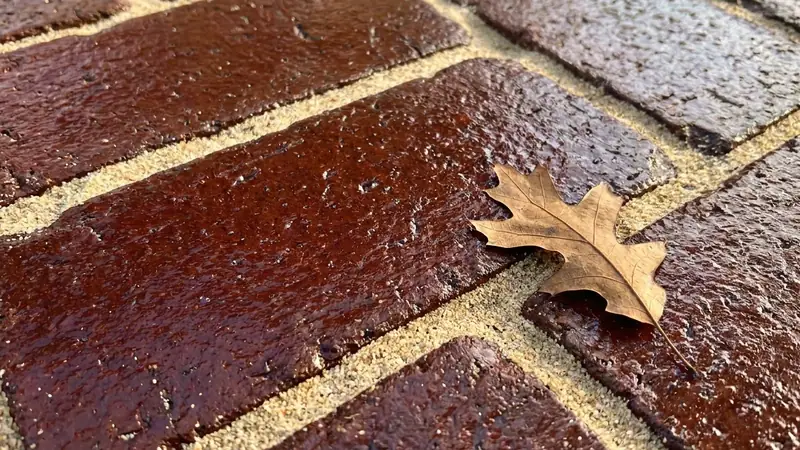
Matte looks quiet by older brick. A wet look is shinier but shows scuffs sooner, a point for busy driveways.
Nothing to sign yet
The estimate carries no obligation. Choose the date and the finish, or walk away, with no pressure from anyone.
Get Your Free Estimate in Fort Caroline
Tell us about your pavers in Fort Caroline.
Free, no obligation
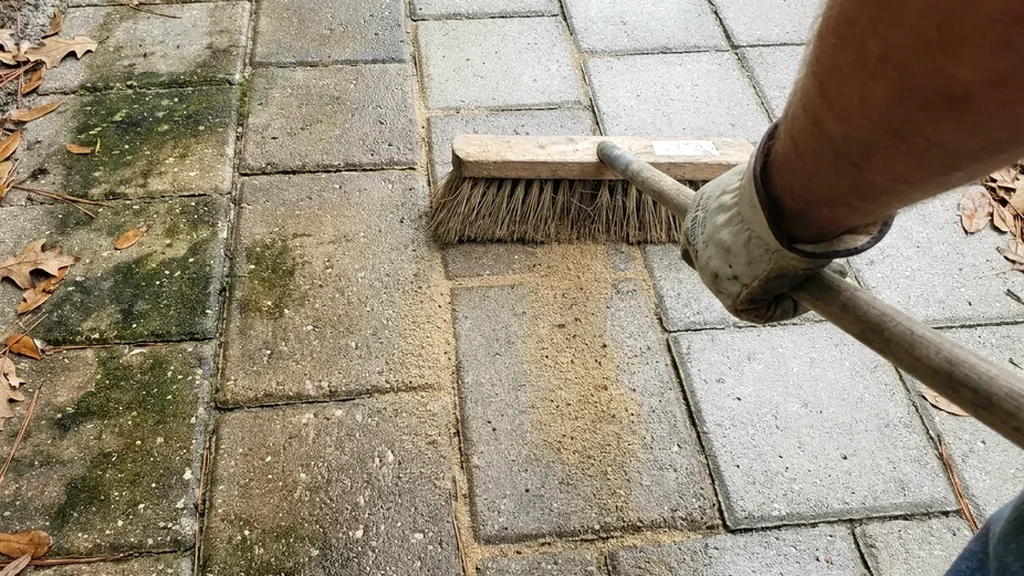
What paver problems show up most in Fort Caroline?
Homes from many decades, sealer from unknown years
Fort Caroline Club Estates has homes built from 1959 to 2021, and Fort Caroline Shores went up from 1975 to 1978. With that spread, a driveway may carry a coat that a past owner applied and nobody wrote down. A solvent-based coat rules out a water-based one on top, so the contractor checks first. Finding out what is on the pavers comes before choosing a sealer. Keep any old receipt or product name you can find, since it can settle the question in a minute. Fort Caroline Oaks shows the same spread, with a median build year of 1991 and neighbors such as Hunters Run and Caroline Cove nearby. Hunters Run, with 50 homes built from 1986 to 1998, sits near Caroline Cove, which has 142 homes, so even neighboring cul-de-sacs can hold pavers laid in different years. Fort Caroline Shores homes, built from 1975 to 1978, have three or four bedrooms, and their drives may have been redone at least once since.
Preserve woods that keep pavers damp
The Theodore Roosevelt Area of the Timucuan Preserve is 600 acres of hardwood forest, wetlands and scrub, and it sits close to these streets. Trees like that drop leaves and hold moisture. Moss and algae show up on pavers where shade is heavy and the surface stays wet, which means a drive under oaks often turns green first. Pollen and leaf litter settle into the same joints, so the contractor looks there as well. That is why a wash on a wooded lot often takes longer than one on an open bluff. The Willie Browne Trail leaves Mount Pleasant Road where it crosses Hammock Creek, and creek-side lots stay cool and wet. Steps and walks there turn slick first.
Sandy ground and big summer storms
The USDA describes the Mandarin soil series in Duval County as sandy throughout, with a seasonal high water table 18 to 42 inches down. Rain totals about 52 inches a year in Jacksonville, and much of it comes in short, hard storms. Joint sand washes out under that, and open joints let soil in and give weeds a start. Fresh sand put back after the wash is what slows that cycle. On a sunny stretch of drive the joints may look fine while the shaded edge is nearly empty. In a wet summer, that seasonal water table keeps joints moist for longer.
High water from a tidal river
The St. Johns here is an estuary, and the water district says a nor'easter can raise it several feet. The National Park Service model of the fort sits near the river. Pavers on low lots can end up under a film of silt. That film must be washed away before any sealer goes on. Washing comes first on those lots, and the drying time that follows is part of the schedule. Sealing over silt would only seal the dirt in. That is also why the park service plans to rebuild its fort model on higher ground. Hurricane Dora wrecked the first park service model of the fort in 1964, a reminder of how the river behaves.
Orange marks from well-fed sprinklers
University of Florida extension notes that irrigating with iron-rich water, common in Florida wells, can leave orange stains. If your lawn heads spray across the pavers, look for rust-colored lines at the edge. Sealer would trap those marks, so they get dealt with at the wash stage. A contractor can point out where the spray lands, which helps you decide whether to adjust the heads. Orange lines near a lakeside lot or a golf course edge are worth pointing out at the first visit.
Do Club Estates, Fort Caroline Shores and The Valley need different sealing plans?
Often they do, because the homes went up in different decades. In Fort Caroline Club Estates, which dates to 1960, houses run from 1959 builds to 2021 builds on lots up to an acre. Fort Caroline Shores followed in 1975 to 1978, mostly three and four bedroom houses. Tell the contractor your subdivision when you request your free estimate.
The Valley at Hidden Hills circles Lake Narcissus and holds 478 parcels built from 1974 to 2008, with a median of 1989. About 80 percent of its homes are owner-occupied, so many owners can speak to what was applied before. Dig out any old receipt or product name and call (904) 606-1450 with it.
Riverwoods has had a mandatory homeowners association since 1985, and its Architectural Review Board approves exterior changes. Florida law limits an association to the standards in its own documents and says it must apply them equally. Ask your board whether a new finish needs approval, and give the contractor your gate details when you request your free estimate.
Fort Caroline Oaks homes with recorded sales have a median build year of 1991, and Jean Ribault Woods and Robins Nest sit nearby. Houses from that era may carry first-generation pavers that are now close to thirty years old. If yours is one of them, request your free estimate and mention the year.
What does paver sealing cost in Fort Caroline?
Published prices in this region run from $1.75 to $3.25 per square foot to clean, sand and seal. Tree shade, silt from high water and a failed old coat push a Fort Caroline quote toward the top. A Jacksonville cost guide adds that smaller jobs cost more per foot. Ask for a price on your pavers when you request your free estimate.
Locked gates and long approach roads add setup time, since equipment has to be carried in. Lanais and pool decks go into the same measurement as the drive, so a larger layout means a larger total. Written square footage makes two bids easy to compare. Call (904) 606-1450 to hear which of these points fit your property.
| Paved area | Typical example | Clean, sand and seal |
|---|---|---|
| 300 sq ft | Small patio or walkway | $525 to $975 |
| 600 sq ft | Two car driveway | $1,050 to $1,950 |
| 1,000 sq ft | Large driveway or pool deck | $1,750 to $3,250 |
| 1,500 sq ft | Driveway plus pool deck | $2,625 to $4,875 |
Math based on the $1.75 to $3.25 per square foot that Northeast Florida paver companies publish. Your contractor sets the actual price after seeing the surface. Repairs, leveling and stripping failed sealer are usually extra.
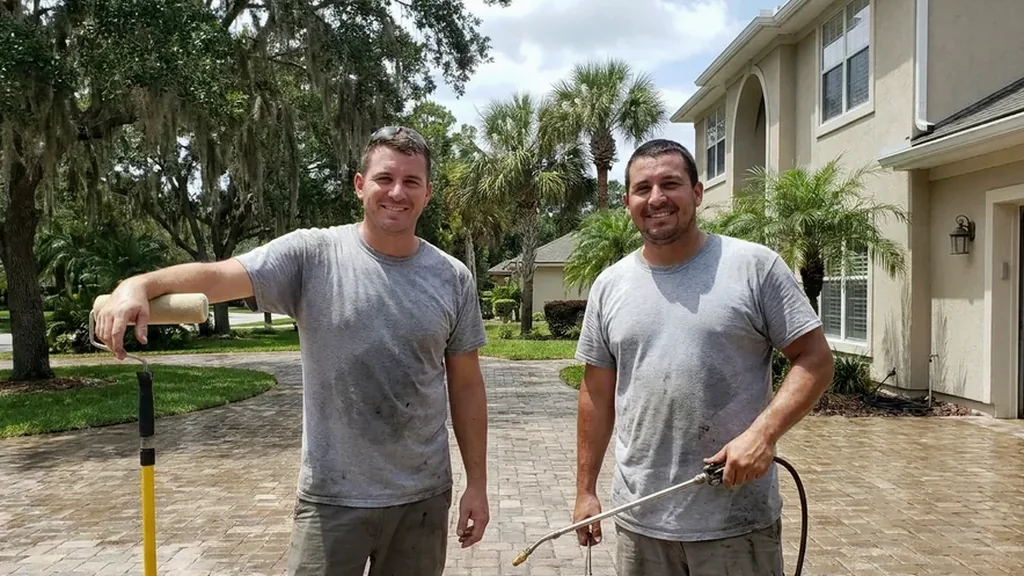
How does a paver sealing job work in Fort Caroline?
Walk the lot
The contractor notes how water leaves your drive, which pavers have dropped and what old sealer shows through. One Jacksonville company says sealing keeps a dip a dip, so resetting comes first. A water-based product will not go on a solvent-based coat, so identifying the old one matters. For a gated lot, the contractor also asks who opens the gate and when.
Scrub off shade growth
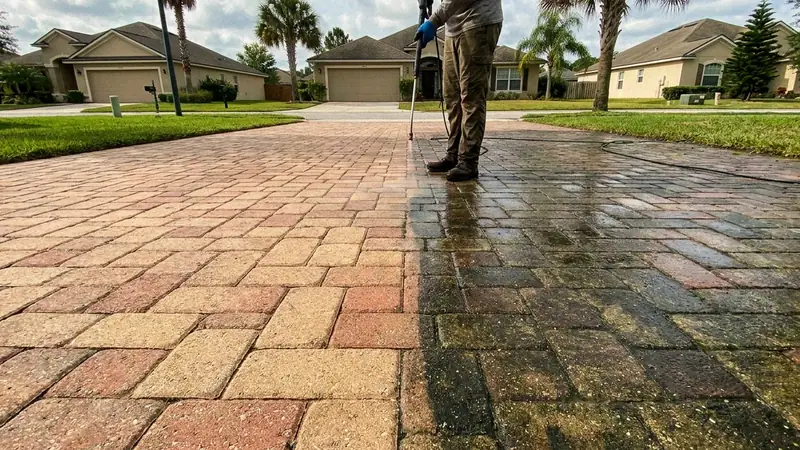
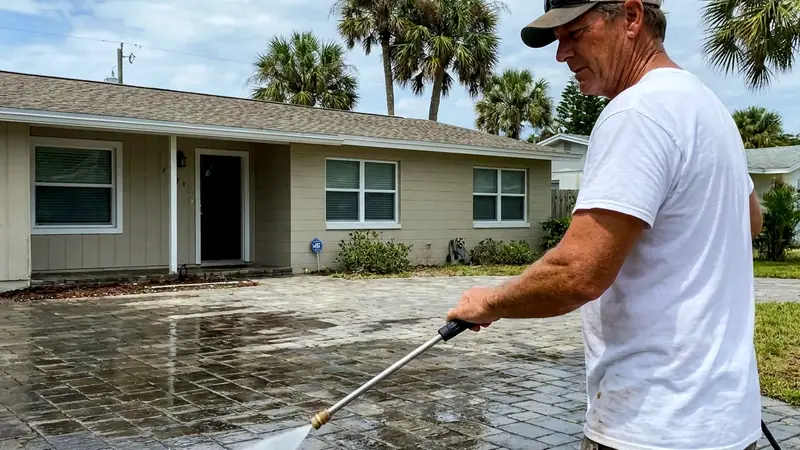
The cleaning step lifts green film, leaf tannin and any silt left behind by high water. Rust lines from sprinklers are treated here. Planting beds and the wall beside the garage are kept clear of rinse water. Leaves packed into corners and steps are lifted out first.
Refill the seams
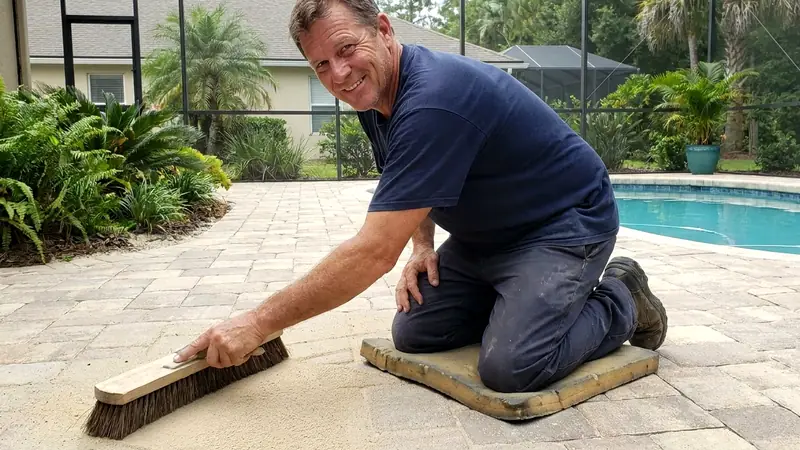
A wash carries joint sand away, so new sand is brushed in before any coat. Sandy Duval County ground gives weeds an easy start in thin joints. A final sweep clears the surface once the seams are full. A half-empty seam is where the next weed starts, so the sweeping is slow and thorough.
Let the surface dry
Dry pavers are a must for sealer. Rain here peaks from May to September, and shaded drives near the preserve woods hold moisture longest. Waiting costs a day or two, but it protects the coat. A bluff drive in full sun can dry hours before one in preserve shade.
Apply and set
The contractor sprays your chosen finish and rolls it in, a method one Jacksonville company calls typical. Walking is usually fine within hours, and cars stay off about a day. The usual quote is two to five years before the next coat. Keep sprinklers off for the day so spray does not spot the new coat.
Complete paver services in Fort Caroline
A Fort Caroline job has four stages: wash, new sand, dry time and sealer. Each has a purpose, and leaving one out shortens the life of the coat. The wash takes off shade growth and river silt, and the sealer goes on last so nothing dirty gets trapped. Call (904) 606-1450 and ask how the stages would run on your lot.
Pool decks, lanais, walks and drives each wear their own way. Bare feet and sun hit the deck, tires hit the drive, and shade hits the walk. A deck beside a screen enclosure needs more care with rinse water than an open apron. List your surfaces when you request your free estimate.
You choose a type and a sheen. Water-based and solvent-based sealers do not mix, so an old solvent coat limits what can go over it. Matte hides scuffs better on a daily drive, while wet look adds shine and marks sooner. To talk through which fits your house, call (904) 606-1450.
Weather runs the calendar. Summer rain comes in short, hard bursts, and sealer needs a dry surface, so dates can slide. Pavers beside the woods dry slowest, and low lots near the river may need a second look after a high tide. Pick a window with the contractor when you request your free estimate.
Questions to ask before you hire
- How do you handle pavers near a screened lanai or pool cage?
- Will you show me the sealer's data sheet, not just the product name?
- How do you protect my landscaping and potted plants from the cleaner and sealer?
- Do you rinse salt film off the pavers before sealing, since I am close to the ocean?
- Do you seal the edges along the grass and the pool coping too?
- Does my HOA need a notice before the work, and can you give me a start date for it?
- What do you do about efflorescence, the white haze that comes up through the pavers?
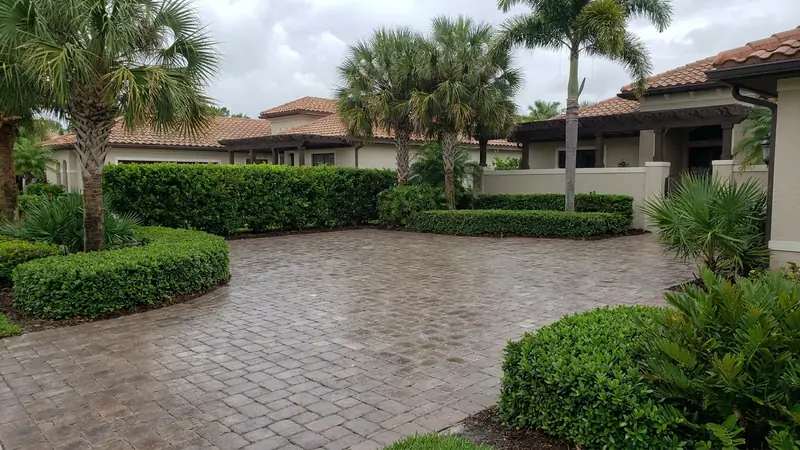
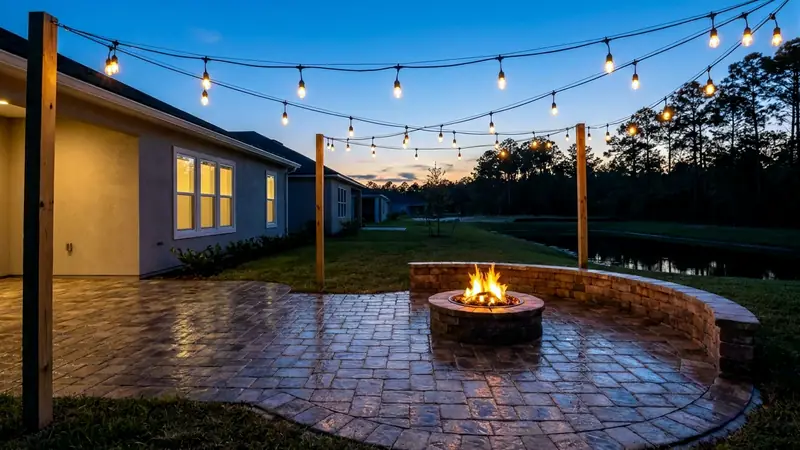
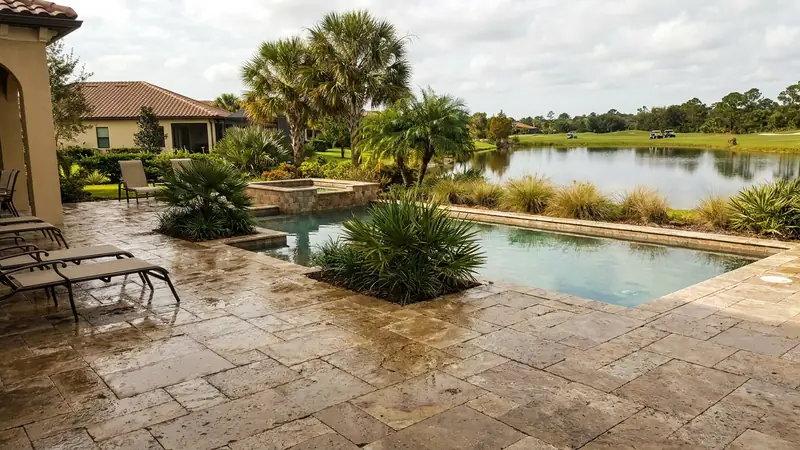
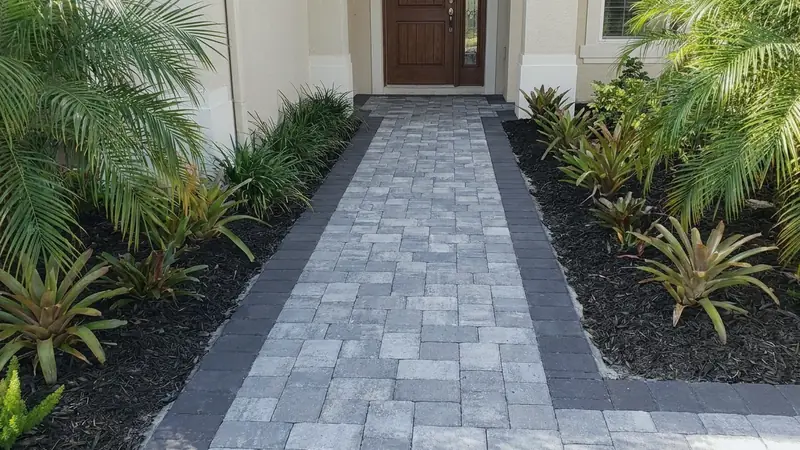
What do sealed pavers look like around Fort Caroline?
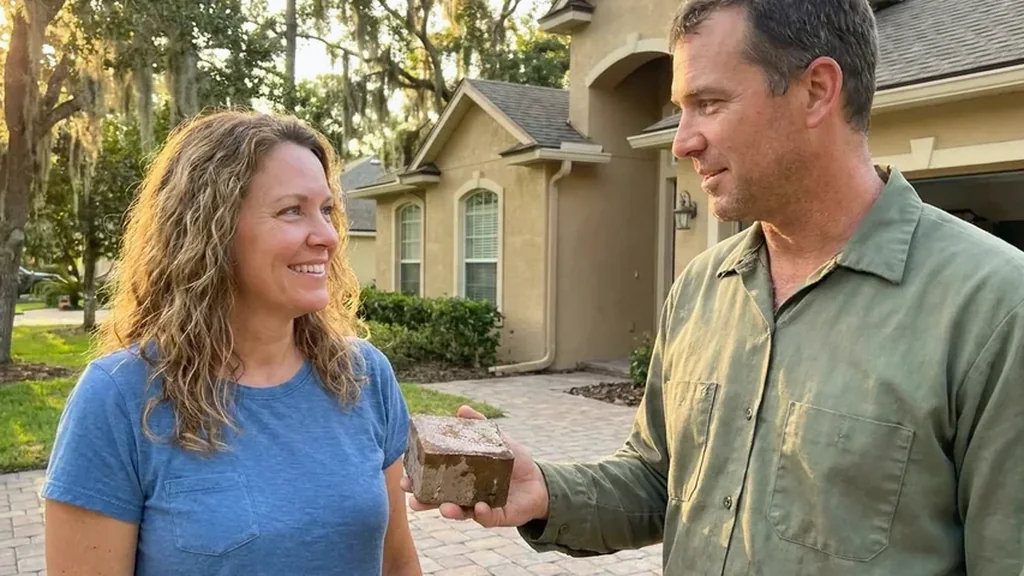
Why local matters in Fort Caroline
Subdivision matters here, so a contractor from the area asks about it first. A street in Club Estates can hold pavers from 1959 or from 2021, while The Valley circles Lake Narcissus with homes from 1974 to 2008. Those answers shape what the wash will find. Call (904) 606-1450 and name your subdivision.
Roads are part of the picture too. About $30 million of FDOT work began in June 2022 along Fort Caroline, Mount Pleasant and McCormick roads, with new drainage structures included. Trucks plan arrival times around work zones like that. To see how a visit would be timed, request your free estimate.
Land at the edge of the preserve behaves differently from a bluff lot. Hammock ground stays shaded and damp, while higher ground sheds water faster. A contractor who has seen both builds wash time to match. Say which one you have when you call (904) 606-1450.
ZIP 32225 counted 57,441 people and 23,619 housing units in the 2020 census, and about 68 percent of occupied homes were owner-occupied. That is a lot of driveways, and a contractor who covers the area learns where each street sits. Call (904) 606-1450 and name yours.
What should I know about Fort Caroline before I hire someone?
Fort Caroline is as much woodland as neighborhood. Fort Caroline National Memorial sits at 12713 Fort Caroline Road and hosts the visitor center for the Timucuan Preserve. The Spanish Pond Trail leads off that road, and the Willie Browne Trail starts off Mount Pleasant Road beside Hammock Creek. If your lot backs onto that kind of green, request your free estimate and mention it.
Willie Browne gave his land to The Nature Conservancy in 1969 on the condition that it stay natural, and the 600-acre Theodore Roosevelt Area carries his request. Ed Austin Regional Park on McCormick Road, a former golf course the city bought in 1994, adds more open green. Homes near any of these spots share the shade and damp that wear on pavers. Call (904) 606-1450 and name the closest landmark to your street.
Queen's Harbour opened in 1988 with about 950 planned home sites, and its homes sit on the Intracoastal, a lagoon, a golf course or under broad oaks. A freshwater lake there joins the waterway through a lock. Water on every side means damp air, so mention it when you request your free estimate.
Fulton Road Landing, a natural-surface launch at the end of Fulton Road, is a good marker for the river side of the area. Neighbors there often give directions by it. Call (904) 606-1450 and say which landmark is closest to your street.
Frequently Asked Questions
Is sealing pavers a good move on a Fort Caroline lot?
For many homes it is, mainly because a coat follows a full wash and fresh joint sand. Sandy Duval County ground lets weeds root in open joints. Ask the contractor what the sealer will and will not do on your surfaces. Streets here were built across decades, so the answer is easier to give once the contractor sees yours.
How many years does paver sealer last near the preserve?
The usual quote is two to five years before the next coat. Deep shade and daily tires can push you to the short end of that span. One Jacksonville company says water that soaks in and darkens a paver, instead of beading, shows a coat is done. A reseal date on the calendar keeps you ahead of it.
Is it better to spray or roll sealer onto a Fort Caroline driveway?
Professionals typically do both, according to a Jacksonville company: spray first, then back-roll. The roller spreads the coat evenly and works it into the joints. Ask which method is planned for your surface. Both steps happen on one visit once the surface is dry.
Why does paver sealing cost so much in Fort Caroline?
The price pays for a wash, new sand, sealer and the drying time between them. A cost guide from Jacksonville says gates, stairs and tight side yards add prep hours. In Northeast Florida, published prices run from $1.75 up to $3.25 per square foot for the clean, sand and seal. Ask that the measured square feet be written into the quote.
Do Riverwoods or Queen's Harbour rules cover paver sealing?
Only if the community documents say so. Riverwoods needs Architectural Review Board approval for exterior changes, and Florida law holds a board to what its own guidelines state. Send your board a short written question before you book. Queen's Harbour is also gated, so mention that when you ask for a visit.
What happens to a sunken paver on a Fort Caroline drive?
It gets reset before any coat goes down. A Jacksonville company says sealing over a dip only preserves the dip. Walk the contractor to each low spot on the first visit. Roots from large oaks can lift a section more than once.
How long before cars can use a freshly sealed drive?
Plan on about a day, and walking is usually fine after a few hours, per one Jacksonville company. The product and the weather can shift that. Get the exact wait for your sealer in writing. Pets and wheeled toys wait until then as well.
Will sealing hide the orange marks from my sprinklers?
No, rust lines are treated during the wash, because a coat would trap them. Florida well water is often high in iron, University of Florida extension says. Turning the heads a bit keeps new streaks from forming. Lakeside and golf course lots often have long sprinkler runs, so look along the edges first.
Ready for a Free Estimate in Fort Caroline?
Call (904) 606-1450 and tell us about your pavers.
Free, no obligation