
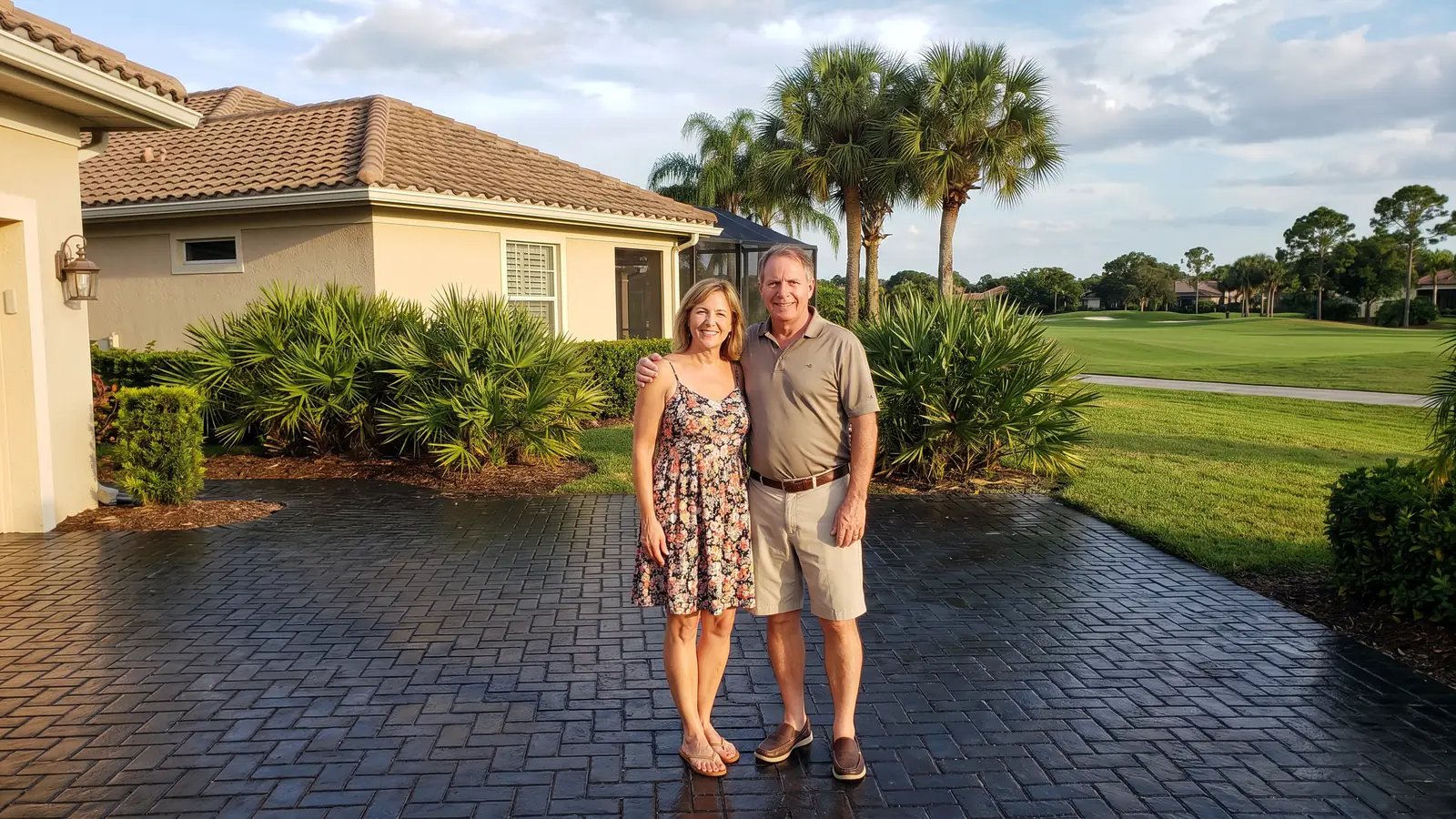
Paver sealing for St. Augustine homes
Paver Sealing in St. Augustine, FL
St. Augustine pavers face salt air, king tides and historic district rules, so call (904) 606-1450 for a free sealing estimate.
- Brings out deeper paver color
- Fresh joint sand helps lock pavers in place
- Gives weeds less room to grow
- Makes the surface easier to keep clean
- Free estimate, no obligation
Request a Free Estimate
Free, no obligation.
Fast, careful paver sealing in St. Augustine
St. Augustine homeowners can get paver sealing and a free estimate, from the old streets near the Bridge of Lions out to Fullerwood Park and Nelmar Terrace. A local contractor does the wash, the sand and the sealer on courtyards, driveways and walkways. Dial (904) 606-1450, and a contractor gets back to you within 1 business day, usually much sooner.
Picture the courtyard that stays damp in the shade, with salt haze on the surface and weeds in the joints. A wash, new sand and the right coat give the same pavers back one clean, steady color. That is the look a sealed St. Augustine courtyard can have. When you want a plain answer about yours, request your free estimate.
Why hire a local paver sealing contractor in St. Augustine?
Salt air, tidal flooding and historic district rules shape every St. Augustine sealing job. Ask a local contractor how they apply to your street when you request your free estimate.
Salt-aware advice
Close to the bay, salt can bring the next coat sooner. A contractor tells you what that means for your courtyard.
District rules in view
Most work in the five preservation districts needs a certificate. A contractor will remind you to check before booking.
A published range
Companies post $1.75 to $3.25 per square foot to clean, sand and seal. Use it as a yardstick for St. Augustine quotes.
Your call, always
The estimate is free. You set the date and the finish and decide whether to go ahead.
Get Your Free Estimate in St. Augustine
Tell us about your pavers in St. Augustine.
Free, no obligation
What paver problems show up most in St. Augustine?
Salt air near the Matanzas River and bay
A St. Augustine paver company says salt air from the Matanzas River and bay can crystallize in paver pores and shorten reseal cycles to 2 to 3 years near the water, versus about four elsewhere. Salt is hard on any surface, and pavers are porous. A courtyard close to the bay is the one to watch. Salt film comes off in the wash before sealing. If you can see the water from your patio, say so at the first visit, because that is the detail that sets the schedule. Ask about a shorter schedule if your patio faces the water. Salt near Matanzas Bay is the reason local companies talk about shorter reseal cycles.
King tides and storm water on low lots
The city says it can flood when regular rain lands at the same time as high tides, and that some local soils drain poorly. Davis Shores, Lincolnville and parts of Abbott Tract flooded in Hurricane Matthew. Pavers that sat in tide water can hold silt and salt, which have to go before sealer does. A walk around the lowest corner of the lot tells the contractor where to look first. Davis Shores and Abbott Tract are other low areas the city names.
Play sand that storms and sprinklers wash out
A local paver sealing company says most installs in this area were filled with play sand. Afternoon storms and sprinkler cycles wash it out. St. Augustine gets about 50 inches of rain a year, with daily thundershowers in summer. Thin joints let pavers shift and invite weeds. Replacing that sand is part of every job here, and sealer then helps hold it in place. Sand lost now means thin joints by next summer.
Old brick, coquina and natural stone
St. Augustine's first permanent street material was brick, and coquina built the Castillo and the old city gates. Exposed coquina slowly erodes, which shows how porous local stone is. If your patio uses brick, coquina-look pavers or travertine, a penetrating finish that lets the stone breathe is one option. The contractor needs to know which stone you have. Brick and stone are also where trapped moisture does the most harm. Stone and brick are also where mistakes show up as haze or flaking.
Damp shade in narrow lots
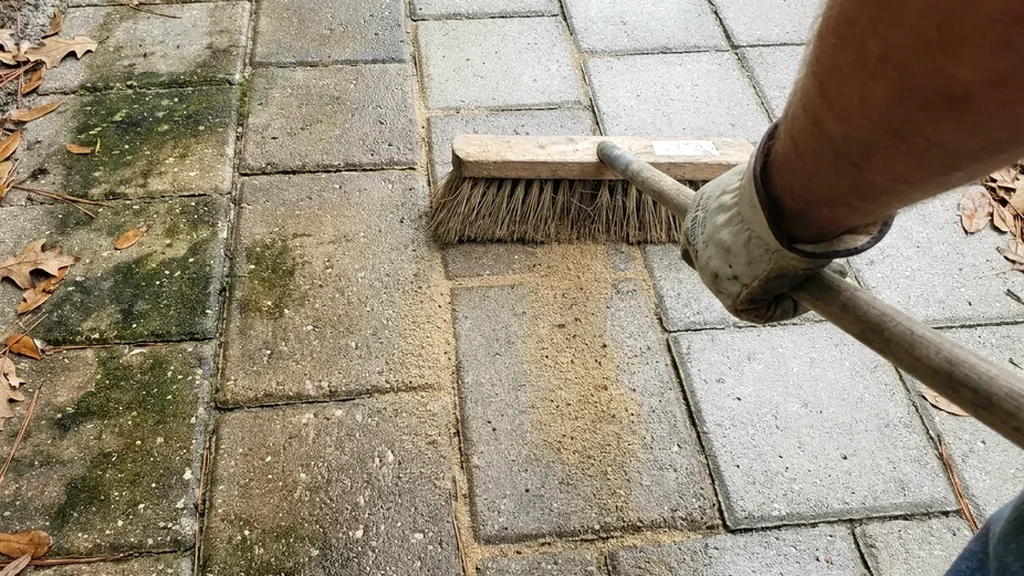
Lincolnville has narrow streets and small lots, and Fullerwood Park's homes sit under mature trees along tidal marsh. Where shade keeps pavers damp, algae and mildew take hold. A walkway between two houses may never get a full day of sun. Green film is slick, so it comes off before sealing. A coat makes the next cleaning easier, since dirt and algae grip a sealed surface less. Dry corners get the same coat as sunny ones. Fullerwood Park's eastern edge curves along tidal marshes and Hospital Creek, so damp air is part of life there. Lincolnville has narrow streets and small lots, which leaves little room for sun to reach the pavers. Fullerwood Park curves along tidal marshes and Hospital Creek on its eastern edge, so the air stays damp there too.
Do I need approval to seal pavers in St. Augustine's historic districts?
Possibly, because the city requires a Certificate of Appropriateness for most work inside its five Historic Preservation zoning districts. The Architectural Guidelines govern that review, and owners can look up their district on the city's site. Check your district first, then request your free estimate.
The city's page covers changes to a building and its site, and it does not name sealing. A short question to planning staff can settle whether a clear matte coat counts as maintenance, and staff make that call, not a contractor. Call (904) 606-1450 to describe what you want done once you know.
The neighborhoods differ. Fullerwood Park has gridded streets of Colonial Revival and Bungalow homes east of San Marco Avenue, and Nelmar Terrace has Spanish Revival and Moorish Revival houses. Abbott Tract has 124 contributing buildings between Matanzas Bay and Pine Street. Name your neighborhood when you request your free estimate so the contractor knows what to expect.
What does paver sealing cost in St. Augustine?
Courtyards in St. Augustine can run large, and the posted range is $1.75 to $3.25 per square foot for a clean, sand and seal. Salt film, silt from tide water and algae in the shade add washing time. A big courtyard costs more than a small walk at the same rate. For a quote on your courtyard, request your free estimate.
Strip-and-reseal sits higher when an old coat has failed, according to Safe Touch. Old lots with tight access and narrow gates can mean more hand carrying. New pavers are told to wait 60 to 90 days, which can push a start date. Ask what applies to your property when you call (904) 606-1450.
| Paved area | Typical example | Clean, sand and seal |
|---|---|---|
| 300 sq ft | Small patio or walkway | $525 to $975 |
| 600 sq ft | Two car driveway | $1,050 to $1,950 |
| 1,000 sq ft | Large driveway or pool deck | $1,750 to $3,250 |
| 1,500 sq ft | Driveway plus pool deck | $2,625 to $4,875 |
Math based on the $1.75 to $3.25 per square foot that Northeast Florida paver companies publish. Your contractor sets the actual price after seeing the surface. Repairs, leveling and stripping failed sealer are usually extra.
How does a paver sealing job work in St. Augustine?
Read the surface and the shoreline
The contractor learns what the pavers are made of, how they drain and where salt, shade or tide water reach them. Old sealer gets identified, since it limits what can go on next. Sunken or rocking pavers are marked for repair first. Bring up any gate or alley access, since a narrow downtown lot can change how gear gets in.
Rinse off salt film, silt and algae
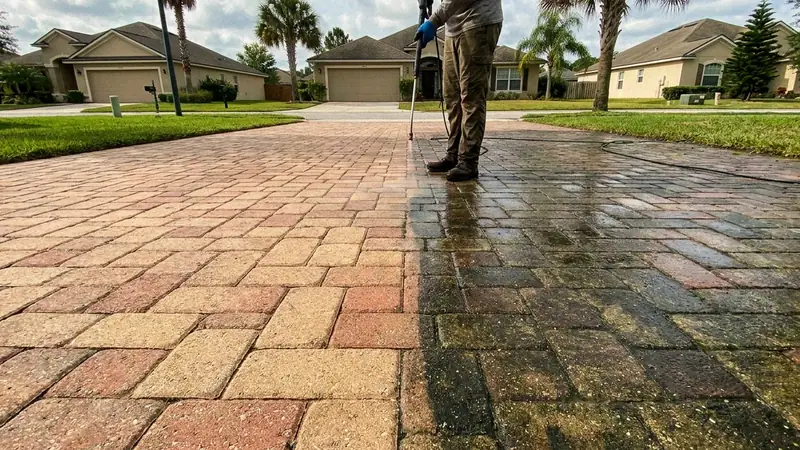
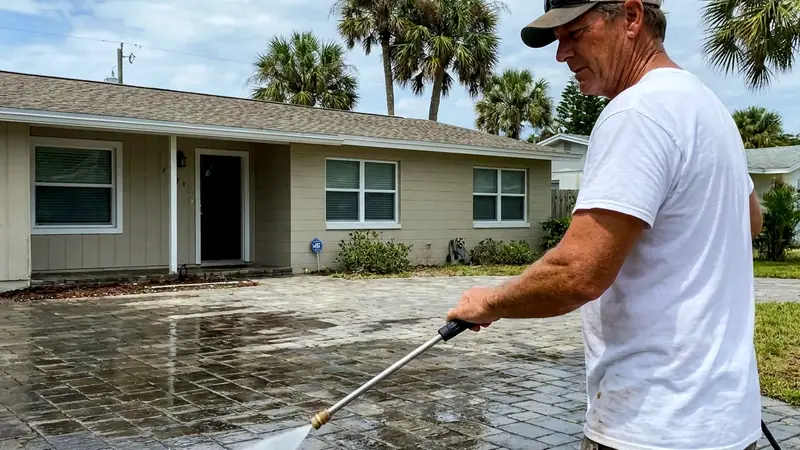
The wash removes salt haze, silt and algae. Both salt and silt show up as a dull film once the surface dries. Pressure is matched to the surface, which matters on older brick and softer stone. Rinse water is kept off older stone, stucco and wood trim near the pavers, and efflorescence gets treated here too.
Top up the joint sand
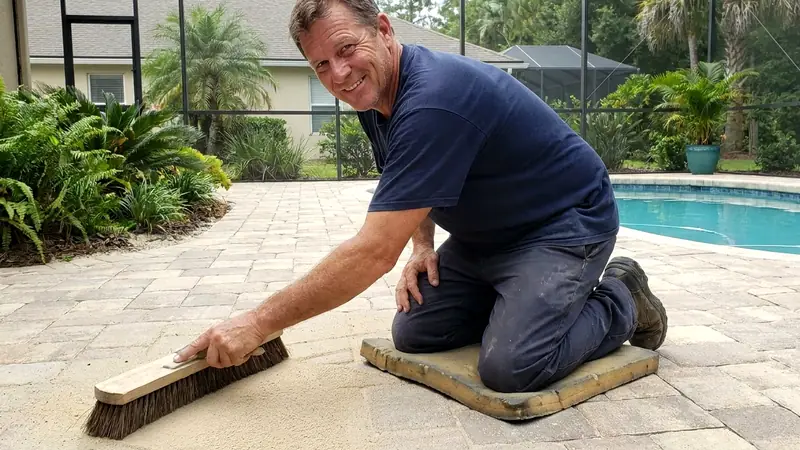
New sand is swept into each joint, then the surface is cleared. Local installs were often filled with play sand that storms wash out, so thin joints are common. A sealed joint also resists weeds and ants better. Edge sand along walls and steps gets topped up last.
Wait out fog, dew and tide water
The surface has to be dry before any sealer goes on. The wet season runs May through October with daily thundershowers, and winter is the driest stretch. Early fog off the bay can leave pavers damp well into the morning, and tide water can keep low lots wet. A careful contractor holds off until the pavers are dry. Ask how long the contractor expects the pavers to need.
Lay down the coat
Now comes the coat, in the finish you chose. Matte keeps a quiet look beside an older house, and a wet look adds depth but shows scuffs sooner. Quotes run two to five years between coats, with a shorter gap close to salt water. Edges against walls and planting beds are worked by hand so the coat reaches every strip.
Complete paver services in St. Augustine
In St. Augustine the wash does double duty, clearing salt film and silt before anything else. Sand follows, then a dry-out, then the sealer, so nothing dirty ends up under the coat. To ask how long each step takes on your lot, call (904) 606-1450.
Courtyards and patios hold most of the square footage in town, while driveways are often shorter. Walkways in shaded side yards go green first, and pool decks add chlorine and sun. A job here can cover several surface types at once. When you request your free estimate, list every surface you want done.
Pick the sealer from the surface up, and mind the old coat, since it narrows the choices. A film sealer comes in matte, satin or wet look, and a penetrating one leaves the look nearly unchanged. Travertine and coquina-style stone often suit a penetrating finish that lets the stone breathe. Call (904) 606-1450 to talk through your pavers.
Tides and storms steer the schedule. Summer storms are short but hard, and a king tide can flood a low lot. Cooler months are drier, which helps dry-out times. To fit a date to your street, request your free estimate.
Questions to ask before you hire
- How long before I can park a car on the driveway again?
- Do you rinse salt film off the pavers before sealing, since I am close to the ocean?
- What do you do about efflorescence, the white haze that comes up through the pavers?
- Does my HOA need a notice before the work, and can you give me a start date for it?
- Will you show me the sealer's data sheet, not just the product name?
- What happens if it rains or the dew is heavy on the day you scheduled?
- Do you seal the edges along the grass and the pool coping too?
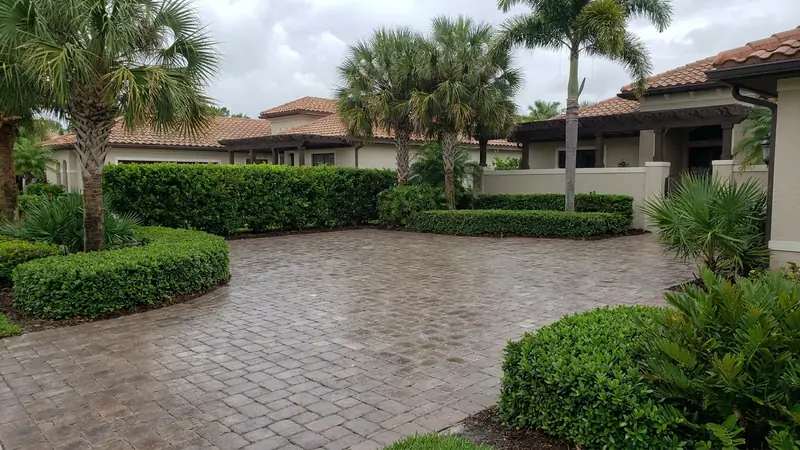
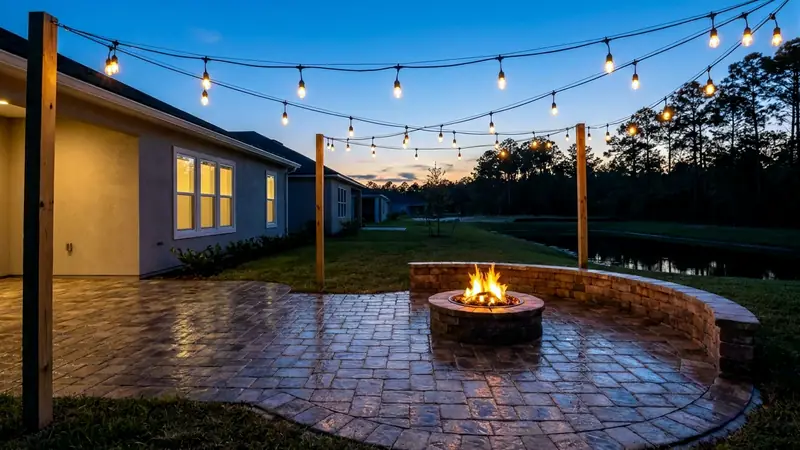
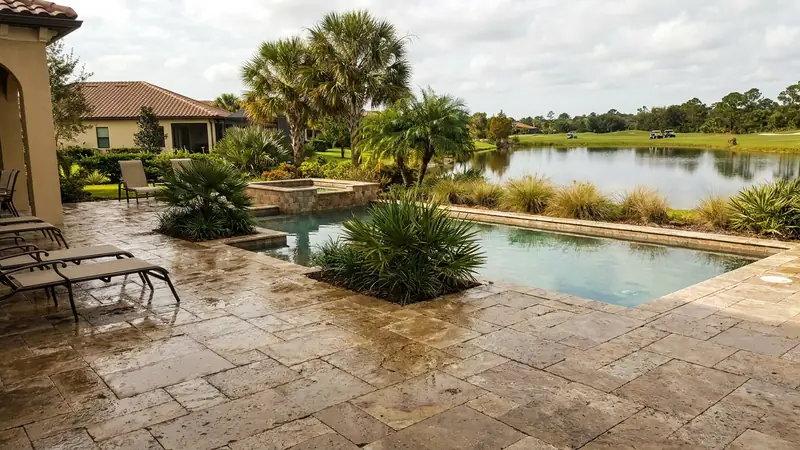
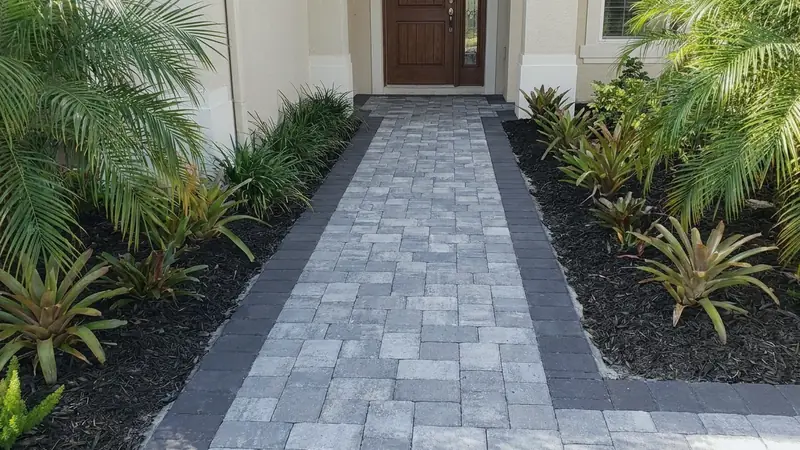
What do sealed pavers look like around St. Augustine?
Why local matters in St. Augustine
Salt changes things in St. Augustine, and a contractor who works here knows it. Near the bay a courtyard can need a coat sooner than one farther inland, which affects the wash and the schedule. A quick question about how close your patio is to the water helps set that. For a contractor who works in and around the old city, call (904) 606-1450.
Floods and tides are part of local life. Several neighborhoods took water in Matthew and Irma. Ask whether the lowest part of your lot ever holds water, since that is where silt settles. If your lot has taken high water, say so when you request your free estimate.
Historic rules add one more layer. Most work in the five preservation districts needs a Certificate of Appropriateness, so a local contractor will tell you to check your district first. That question can prevent a delay. If you want to start, request your free estimate and give your address, and you are not committed to anything.
What makes St. Augustine different for homeowners?
It is an old city that still lives with its history. St. George Street runs through downtown with over 30 historic houses and attractions, and the Bridge of Lions has carried A1A to Anastasia Island since 1927. Brick was the first permanent street material here, and the city has chosen to repair its remaining brick streets. If you live near the old city and your walk needs work, request your free estimate.
Freedmen founded Lincolnville in 1866, and its historic district was listed in 1991. Fullerwood Park follows Hospital Creek along tidal marsh, and Nelmar Terrace was platted in 1886. Abbott Tract has 124 contributing buildings and sits between Matanzas Bay and Pine Street. Near any of these St. Augustine landmarks, call (904) 606-1450 and give your street.
Frequently Asked Questions
In St. Augustine, Florida, is it good to seal pavers?
Often it is. One St. Augustine company calls sealing optional but says it guards against stains, fading and erosion, and salt near the water makes a coat more useful. Sealed pavers also resist weeds and ants better. A free estimate shows whether yours need it now.
In St. Augustine, how long do paver sealers last?
Local companies quote two to five years between coats, and shorter near salt water. One local company says 3 to 5 years, and another says salt air near the water can shorten that to 2 to 3. Water that soaks in and darkens the pavers means the coat is gone. Ask the contractor which window fits your lot. A simple bead test on the surface gives you a rough idea. Shaded courtyards wear slower but grow green film.
In St. Augustine, how much does it cost to seal pavers?
The range companies in the region publish is $1.75 to $3.25 per square foot to clean, sand and seal. Where the old coat has failed, expect strip-and-reseal pricing to sit higher. Get the measured area in writing before you compare. Salt film and silt can add wash time, so a look at your own courtyard beats a guess. Tight access to old lots can raise the number.
In St. Augustine, will Dawn dish soap clean pavers before sealing?
Cleaning before sealing is a job for the contractor, who matches the method to the surface. Soap alone will not lift salt, silt or green film from porous pavers. Sealer also needs a fully dry surface, so the wash comes with a dry-out. That is why a free estimate starts with a walk around the pavers. Many pros prefer to choose the cleaner by the surface.
In St. Augustine, can I pressure wash brick pavers?
Brick can be washed, but pressure has to match the surface. Too much can strip joint sand or damage older brick. A contractor adjusts the method and replaces the sand before sealing. Older streets with brick or coquina-style stone call for extra care. Pressure washing also removes the joint sand, which is why sand comes back before sealing.
In St. Augustine, do I need city approval to seal pavers?
It depends on your district. The city requires a Certificate of Appropriateness for most work in its five Historic Preservation zoning districts. The page does not name sealing, so ask planning staff before work starts. A natural matte coat is usually the easiest to explain to a review board, though staff make the call. Owners who are unsure can ask the city which zoning district an address falls in.
How soon after a king tide can my St. Augustine pavers be sealed?
Once they are clean and fully dry. Tide water can leave salt and silt, and the contractor washes both off and replaces lost joint sand. Sealer over salt or silt would lock it in. Low lots and shaded corners may need extra drying time. A king tide can also leave a low lot damp for days.
Can new pavers in St. Augustine be sealed right away?
No, new pavers should wait about 60 to 90 days. That lets moisture escape and efflorescence surface to be treated. Sealing too early can trap it. A contractor can look at your pavers and tell you how long to wait. Ask the contractor to look at the lowest part of the lot first.
Ready for a Free Estimate in St. Augustine?
Call (904) 606-1450 and tell us about your pavers.
Free, no obligation